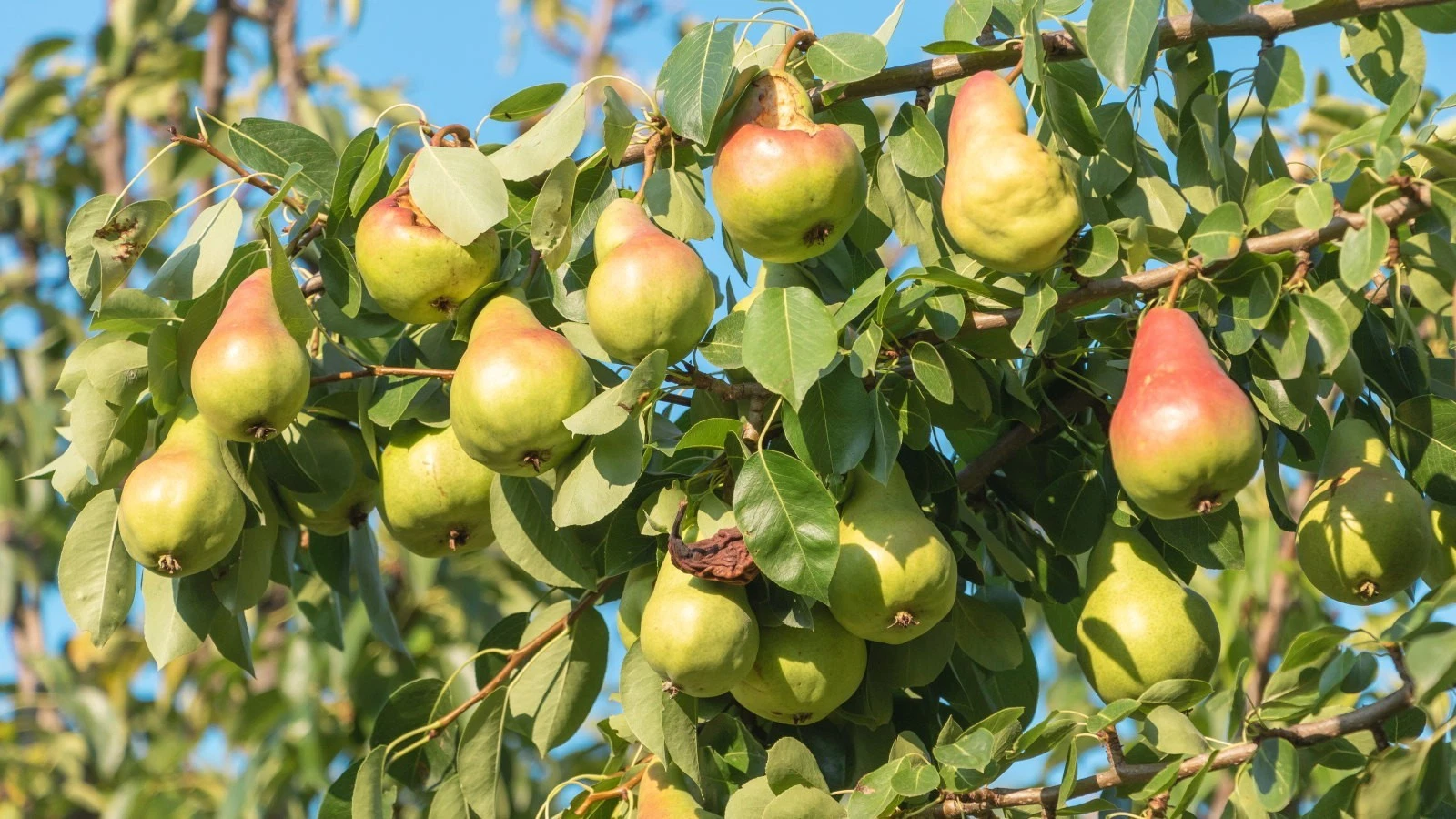
Conference is a familiar pear, but buying a Conference tree still involves several decisions. A maiden on Quince A, a small plant on Quince C and a trained espalier share a variety name without offering the same planting experience. The differences affect the space you need, the work already completed and how you will establish the tree.
This comparison keeps the variety constant. It examines ten British suppliers through their actual Conference offers, so a buyer can choose between a young tree, a more developed bush and a trained form without confusing them. The aim is to make the order more precise, particularly where one product page contains several substantially different options.
One Conference Pear Tree, Several Ways to Buy It
Conference is self-fertile, although a suitable pollination partner can improve cropping. That makes a single tree a reasonable starting point, subject to position and care. The rootstock then sets the broad growth potential: Quince C is a dwarfing choice, while Quince A generally permits more growth. Seedling pear rootstock leads to a much larger proposition and belongs in a separate space calculation.
The list starts with suppliers offering clear choices in rootstock or delivered form, then includes retailers with useful starting sizes and regional nursery options. Within that order, the decisive questions are what is being supplied, how far its training has progressed and how it can reach the garden. Prices and stock counts change, so neither is treated as a permanent measure of value.
A container measurement should be read alongside the rootstock and form. A twelve-litre tree may have more initial development than a small starter, but the pot size does not describe its eventual height or guarantee an earlier first crop. The specifications below are a way to compare like with like.
Best 10 Conference Pear Tree Suppliers for British Buyers
- CRJ Fruit Trees
For British pear growers, CRJ Fruit Trees lists Conference on both Quince A and dwarfing Quince C. To explore the nursery’s range, click here; the useful decision is which Conference specification matches the planting space. The separate Quince C offer is particularly relevant where compact growth or a suitable large container is central to the plan.
Quince A remains an alternative for a garden tree with more room to develop. Choosing between them before comparing delivery height keeps the order focused on the tree’s future role. CRJ Fruit Trees describes Conference as self-fertile, so a second pear is not an automatic requirement, although a compatible neighbour may improve fruit set. The comparison can therefore proceed from growth potential to the supplied form and its seasonal dispatch date.
- Ornamental Trees
Ornamental Trees separates Conference options by rootstock and supplied size. Its listings include a twelve-litre Quince A tree at roughly 150–200cm, with a smaller Quince C option also described. At the research check, availability differed between those choices, which is a good reason to inspect the selected variant rather than relying on the main product photograph.
The larger Quince A form is useful when some initial height matters and there is space for the tree to grow. The Quince C listing gives a distinct compact alternative to enquire about when available. These are different growth decisions as well as different delivery sizes. Avoid treating the taller option as a simple upgrade: its appeal depends on whether the mature tree belongs in the space allocated to it.
- Roots Plants
A young Conference tree and an Air-Pot half-standard occupy very different points in the planting process. Roots Plants lists both kinds of material, including Quince A maiden options and a more developed half-standard described by trunk girth and overall height. That makes the site useful for comparing how much structure you want to buy at the outset.
The maiden leaves more early training with the gardener. The half-standard supplies a raised framework, but its exact clear-stem measurement and rootstock should be established for that selected product. Do not transfer the maiden’s Quince A specification to every other Conference variant. Roots Plants is most relevant here when the question is the tree’s starting stage, rather than a search for the cheapest item carrying the same variety name.
- Pomona Fruits
Pomona Fruits offers Conference through a range of forms that includes young bare-root material, cordons and potted trees on Quince A. Its twelve-litre, two-year option is described at approximately 150–180cm. The differences are useful for a buyer deciding between a free-standing tree and a narrow trained arrangement.
A cordon is a specific way of organising growth, so compare its support and pruning needs with the bush form before ordering. Pomona also lists a stepover option, whose availability needs checking separately; a semi-trained tree will require work after delivery. The value of this supplier is the ability to keep Conference as the chosen pear while comparing several ways to arrange it. The forms should be considered as separate projects, each with its own support and maintenance commitment.
- Blackmoor Nurseries
Blackmoor’s Conference range reaches beyond ordinary bush trees. It includes Quince A cordons and stepovers, as well as a three-tier espalier on Quince C. The espalier is particularly distinctive because the buyer is purchasing an established horizontal framework rather than beginning with an untrained young stem.
That can be worthwhile where a wall or fence already has a measured space for the tree. Check the framework dimensions against the support before choosing it; a ready-made tier arrangement still needs appropriate fixing and continuing pruning. Blackmoor also combines seasonal and potted stock in its ordering system, and mixed orders may wait until all items are ready. For a prepared planting project, matching the tree’s form and arrival date can matter more than choosing the largest container.
- Orange Pippin Trees
Orange Pippin Trees gives Conference buyers several rootstock and form combinations, including Quince A, Quince C and Quince Eline options. Its potted listings distinguish bushes, cordons and half-standards. This level of separation is helpful when comparing a specification from another supplier with a genuinely similar tree.
Quince Eline is an additional named choice to investigate in its own right, rather than assuming that every dwarf pear uses Quince C. The product description and selected form should guide the comparison. Orange Pippin Trees also sets out seasonal dispatch information for its potted and bare-root supply. It suits a buyer prepared to work through the variants carefully and order a precise combination, particularly where the desired form is available on more than one rootstock.
- Dobies
Dobies’ Conference variants form a small specification ladder. The nine-centimetre starter and five-litre standard use Quince C; a four-litre option uses Quince Adams; a twelve-litre tree uses Quince A. Reading across those choices shows why container volume and rootstock must be recorded separately. The smallest plant leaves more establishment and formation with the gardener. The standard supplies a different starting structure. Neither package establishes a fixed date for the first crop. Once the required growth basis is settled, compare the amount of development purchased and the relevant dispatch date. The range is useful precisely because it exposes several combinations, allowing a patient grower and a buyer seeking more initial structure to make different, well-specified orders.
- One Click Plants
One Click Plants includes Conference in its patio fruit collection, with different supplied pot sizes. This makes it an accessible retail option for someone adding a pear to an existing group of patio plants. The named variety gives the buyer a clear crop choice, while the collection brings it together with other familiar fruit trees.
For a permanent container project, the next step is to establish the selected tree’s rootstock and intended maintained size. Those details cannot be inferred from a two-litre or four-litre label. This offer sits lower in the comparison because the container buyer needs that extra specification before making a final choice. It remains worth considering for the actual Conference listing, particularly when the supplier can confirm a form that fits the planned tub and growing space.
- Keepers Nursery
Quince A and Pyrus appear on separate Conference maiden lines in Keepers Nursery’s stock list. This is the strongest growth contrast within the same young-tree format in this comparison.
A Pyrus-rooted pear needs a much larger space calculation. The maiden label says how early the tree is in its formation; it does not restrict its eventual crown to a modest garden size.
Keepers’ winter programme suits dormant-season establishment, with the early framework shaped after planting. Put the rootstock name beside Conference on the reservation and discuss the intended spacing with the nursery. Where a larger pear tree is welcome, the seedling-rooted offer becomes a positive choice; where space is limited, the Quince A line deserves a separate assessment.
- Mill Farm Trees
Mill Farm Trees lists Conference as maiden, bush and half-standard material. For buyers within reach of its Hampshire nursery, that gives a straightforward way to compare the amount of initial formation they want. It is particularly relevant to a garden or orchard order involving more than one tree.
The nursery’s published minimum order and pricing terms matter for a single-tree purchase, so include them when comparing the total arrangement. Delivery or collection also needs to fit the buyer’s location. Mill Farm earns its place through the named Conference forms, with the regional route as part of the choice. A nearby buyer planning several trees may find that combination more useful than a small mail-order starter, even though the latter appears simpler at first glance.
Compare the Specification Before the Basket
For a compact Conference tree, begin with the named Quince C options and compare their delivered forms. CRJ Fruit Trees, Dobies and other suppliers in the list offer different starting stages, so record both the rootstock and the plant size. A small young tree may be entirely appropriate if you have time to develop it.
For a wall, fence or narrow row, the form becomes the leading decision. Compare Pomona’s cordons with Blackmoor’s trained choices and the variants at Orange Pippin Trees. The support must match the tree you actually order. If an open garden tree is the goal, a bush or half-standard belongs in a different comparison.
Finally, add the arrival date, delivery coverage and any minimum order to the same note. Conference is the constant throughout this list; the purchased plant and the route to obtaining it are what change. A complete specification makes those differences visible before the order is placed.
Source note: Supplier websites, product descriptions and seasonal stock lists inform this comparison, with RHS guidance used for pear rootstocks and pollination. Availability and individual specifications can change; check the selected Conference variant and delivery terms at checkout.
