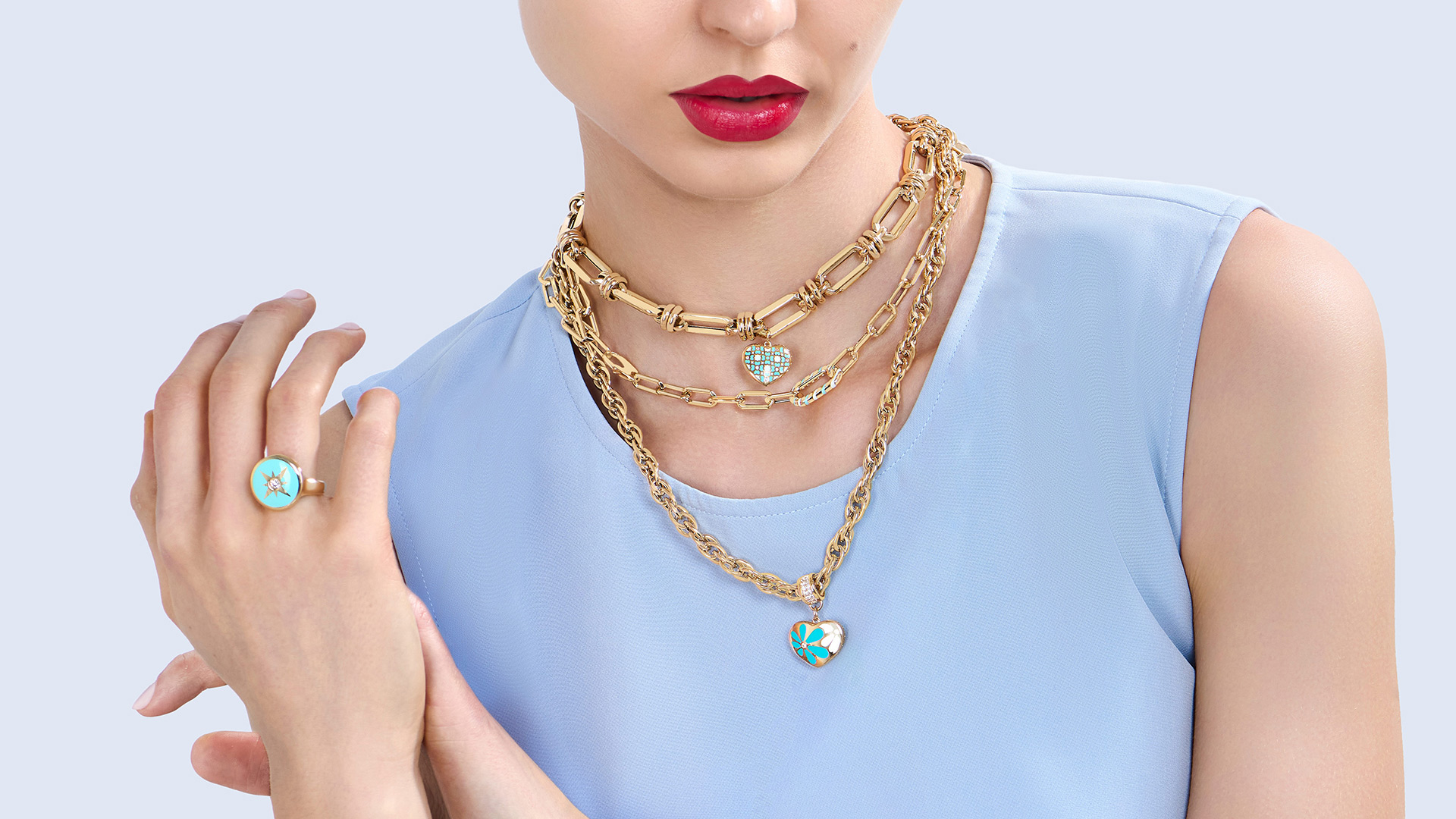
Mastering the art of necklace layering is one of the easiest ways to elevate an outfit from basic to brilliant. A perfectly curated stack adds texture, dimension, and personality to your look, whether you are wearing a simple white t-shirt or a plunging evening gown.
However, there is a fine line between looking effortlessly chic and winding up with a tangled, chaotic mess around your neck. Achieving that Pinterest-perfect balance requires an understanding of lengths, weights, textures, and focal points. This comprehensive guide will teach you the fundamental rules of layering jewelry so you can build your own signature stacks like a professional stylist.
The Core Principles of Necklace Layering
Before you begin piling on your favorite chains, you need to understand the structural foundation of a good layer. A successful stack relies on contrast and spacing. If your necklaces are too similar in length or thickness, they will blend together or, worse, become physically knotted.
1. Establish the Golden Rule of Spacing
The secret to a clean, defined layer is leaving enough breathing room between each piece. Ideally, you want to maintain a distance of one to two inches between each necklace. This ensures that every individual piece is visible and prevents them from overlapping awkwardly.
2. Vary Your Lengths
To create a beautiful cascading effect, you must utilize different necklace lengths. Standard necklace sizes typically increase in two-inch increments. A classic three-piece stack generally utilizes the following blueprint:
-
The Base Layer: 14 to 16 inches (Chokers or short collars)
-
The Mid Layer: 18 to 20 inches (Princess lengths)
-
The Long Layer: 22 to 24 inches or longer (Matinee or opera lengths)
3. Mix Your Textures and Weights
If you layer three delicate, identical cable chains, they will inevitably twist around each other within minutes. To prevent tangling and add visual interest, vary the style of your chains. Pair a sleek herringbone chain with a chunky paperclip link, or contrast a dainty satellite chain with a heavy box chain. The variation in weight keeps the necklaces sitting flat against your chest.
Step-by-Step Blueprint for Building a 3-Piece Stack
If you are new to layering, sticking to three necklaces is the safest and most effective way to start. It provides enough variety to look intentional without overwhelming your frame. Follow this simple three-step formula to build your look.
Step 1: Choose Your Base (The Anchor)
Your shortest necklace sets the tone for the entire stack. This piece sits highest on your collarbone. You can opt for a delicate choker, a simple beaded strand, or a thin, plain chain. Because it sits closest to your face, it acts as the frame for the rest of the jewelry.
Step 2: Add the Texture (The Bridge)
The second piece bridges the gap between your shortest and longest necklaces. This is where you should introduce a distinct texture. Excellent options for the middle layer include a twisted rope chain, a figaro chain, or a necklace featuring subtle embellishments like tiny pearls or gemstone spacers. Keep this layer free of heavy pendants so it does not compete with your final piece.
Step 3: Anchor with a Focal Point (The Statement)
The lowest necklace should be the heaviest and most visually striking piece in your stack. This is where you introduce a pendant, a coin charm, a locket, or a meaningful crystal. The weight of the pendant pulls the entire look downward into a flattering V-shape, which elongates your neck and draws the eye to a definitive focal point.
Advanced Layering Strategies
Once you have mastered the basic three-piece formula, you can begin experimenting with more advanced styling techniques to showcase your personal flair.
Mixing Metals with Confidence
The old fashion rule that dictated you must stick strictly to all-gold or all-silver is entirely outdated. Mixing metals looks incredibly modern and intentional when done correctly.
The trick to mixing metals seamlessly is to maintain a consistent ratio. Do not just throw one silver piece into a stack of four gold necklaces, as it will look like an accident. Instead, aim for a balanced distribution, such as two gold pieces and two silver pieces. Alternatively, look for a bridge piece that inherently features both metals, such as a two-toned chain, to tie the entire look together.
Integrating Color and Gemstones
If your jewelry collection consists entirely of monochromatic metal, adding a pop of color can breathe new life into your wardrobe. You can introduce color by incorporating a strand of turquoise beads, a delicate emerald tennis necklace, or a pendant featuring your birthstone. When adding color, let that specific hue be the star of the show and keep the surrounding chains simple and metallic to avoid a cluttered appearance.
How to Match Your Stack to Your Neckline
An exceptional necklace layer does not just match your personal style; it also complements the silhouette of your clothing. Different necklines require different structural approaches.
V-Necks and Unbuttoned Shirts
This is the easiest neckline to style because it naturally mirrors the V-shape of a layered stack. Mimic the contours of the clothing by using a short choker, a medium chain, and a heavy pendant that sits just above the fabric line.
Crew Necks and T-Shirts
When wearing a high crew neck, you have two choices: layer inside the neckline or over it. If you want to layer over the fabric, choose chunkier, heavier chains that will not get lost against the cloth. A thick curb chain paired with a bold medallion works beautifully over a solid black or white t-shirt.
Strapless and Off-the-Shoulder Tops
With strapless tops, you have a vast amount of bare skin to work with. Focus your energy on the upper collarbone area. A tight choker paired with a 16-inch and an 18-inch necklace keeps the focus high and accentuates your shoulders without crowding your chest.
Practical Tips to Prevent Necklaces From Tangling
The single greatest frustration of wearing multiple necklaces is the inevitable knotting that occurs throughout the day. While no method is entirely foolproof, these professional tricks will significantly reduce tangling:
-
Clasp the Necklaces in Opposite Directions: When putting on your necklaces, close the clasps facing opposite ways. If the first necklace clasps on the right side of your neck, fasten the second one on the left. This prevents the closures from sliding together and twisting.
-
Mix Different Chain Styles: As mentioned previously, lightweight chains of the same style love to knot together. Mixing a stiff herringbone or snake chain with a fluid link chain creates a natural barrier that reduces tangling.
-
Use a Necklace Layering Clasp: Also known as a necklace detangler, this handy tool is a multi-strand separator that connects to two, three, or four necklaces at once. You attach your necklaces to the spacer bar, and then fasten the single main clasp behind your neck. It holds the chains at fixed distances, virtually eliminating tangling.
Frequently Asked Questions
Can I layer necklaces that already have pendants attached to them?
Yes, you can layer multiple pendants, but you must ensure they are of different sizes and hang at significantly different lengths. To avoid a messy look, pair a small, delicate charm necklace at a shorter length with a much larger, heavier medallion at a longer length. Avoid putting two pendants of the similar size right next to each other.
How many necklaces are considered too many for a layered look?
While fashion is subjective, the sweet spot for an everyday look is between two and four necklaces. Going beyond four necklaces requires precise styling, careful selection of weights, and a relatively simple outfit to avoid looking overly cluttered or weighed down.
Is it possible to layer chunky statement necklaces?
Layering is easiest with delicate and medium-weight chains, but you can certainly layer chunkier pieces. If you want to use bold, thick chains, limit your stack to just two pieces. Ensure one is slightly shorter and chunkier (like a heavy choker length) and the second is a bit longer and more streamlined to balance the visual weight.
How do I clean and store my layering chains so they do not knot?
To keep your chains from tangling in your jewelry box, never store them loose in a pile. Hang them individually on a jewelry tree, or store them flat in separate compartments of a jewelry organizer. When traveling, you can thread one end of a chain through a drinking straw and clasp it closed to keep it perfectly straight and knot-free.
Can men wear layered necklaces, and does the same criteria apply?
Absolutely. Necklace layering is highly popular in men’s fashion. The same principles of varying lengths and chain styles apply. Men often favor a simpler two-piece or three-piece stack, combining a classic understated metal chain with a slightly longer piece featuring a minimal pendant, such as a dog tag, a cross, or an abstract geometric shape.
What should I do if my necklaces tangle while I am out running errands?
If you notice your necklaces starting to twist together while you are away from home, locate the clasps. Gently pull the clasps toward the back of your neck to realign the pieces. If they have formed a minor knot, do not yank on them, as this will tighten the knot. Wait until you are home, lay them flat on a hard surface, and use a sewing needle or a drop of baby oil to gently tease the knot apart.
